
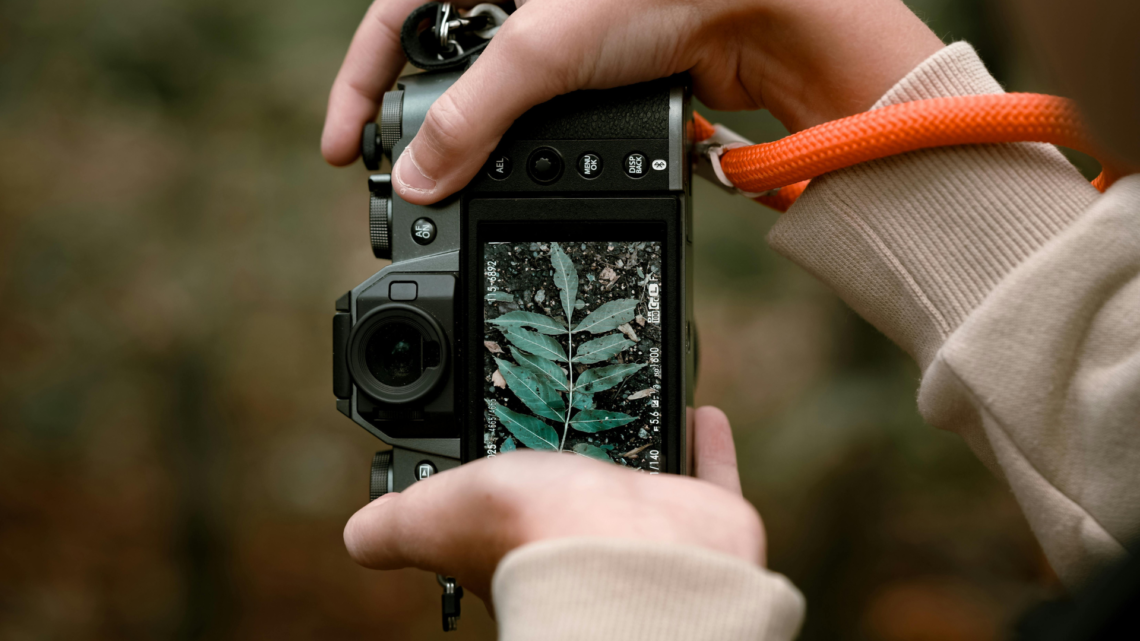
You want tack-sharp photos without guessing at settings or missing decisive moments. Use the camera’s focus point, choose the right AF mode, and confirm focus with a brief half-press or focus lock to get sharp results every time.
They’ll learn practical techniques—spot, single-point, continuous AF, and manual focus—so they can match method to subject and lighting. Short, repeatable steps and quick checks will cut down focus errors and boost confidence on shoots.
Essential Methods and Techniques to Focus a Camera Properly
This section covers how camera focus works, when to choose manual or autofocus, selecting focus points and area modes, controlling depth of field with aperture, and practical techniques for tack‑sharp photos.
How Focus Works and Why Sharp Focus Matters
Focus aligns the lens elements so the subject’s image forms sharply on the sensor. Phase-detection and contrast-detection are the primary autofocus systems; phase detection measures phase differences for fast direction and distance estimates, while contrast detection searches for maximum contrast and can be slower but precise on mirrorless bodies.
Sharp focus matters because it determines which part of the scene reads as subject detail. A blurred subject loses important texture and edges, even if composition and exposure are correct. Sensors, lens calibration, and front‑ or back‑focus issues all affect focus accuracy, so make microadjustments or use AF calibration when a consistent bias appears.
Autofocus vs. Manual Focus: Modes, Settings, and When to Use Each
Autofocus suits moving subjects and fast workflows; use AF‑C (continuous AF, AI Servo) for tracking and AF‑S (single‑shot, One‑Shot) for stationary subjects. Set autofocus settings to match intent: single-point AF for precise focus, zone or wide-area AF for erratic movement, and back‑button focus (AF‑ON) to separate focusing from the shutter release for better control.
Manual focus becomes essential with low light, fast primes at wide apertures (f/1.8 or wider), astrophotography, macro work, or when lenses lack reliable AF. Use focus peaking and magnified live view on mirrorless cameras to confirm critical focus. For telephoto lenses and shallow depth of field, pre‑focus or focus stacking can improve consistency.
Choosing and Using Focus Points and Focus Area Modes
Choosing the correct focus point controls where the camera prioritizes sharpness. Use single‑point AF for portraits or still subjects to place the focus on the eyes. For moving subjects, use zone AF or tracking/3D AF to let the autofocus system follow the subject across the frame.
Select an AF area mode that matches subject behavior: Spot AF or small single‑point for precision; Zone AF for grouping moving subjects; Auto area AF when composition is unpredictable. On DSLRs and mirrorless cameras, enable more focus points or high‑density tracking for unpredictable motion. Remember to lock focus (AF‑Lock or back‑button focus) when recomposing to maintain the chosen focal plane.
Depth of Field, Aperture, and Getting Consistently Sharp Images
Aperture controls depth of field (DoF): wide apertures (f/1.8) create shallow DoF and strong background blur, but demand precise focus. Narrow apertures (f/8–f/16) increase DoF and forgiveness for slight focus errors, useful for landscapes and group shots. Balance aperture against shutter speed to avoid motion blur.
Factor in focal length and subject distance: longer focal lengths and closer subject distances reduce DoF. Use hyperfocal distance for landscapes to maximize in‑focus range. When sharpness across a scene is critical, stop down a couple of stops from lens wide‑open performance, and consider focus stacking for extended depth.
Techniques for Tack-Sharp and Motion-Free Photos
Stabilize the camera: mount on a tripod, use a remote release or mirror‑lockup on DSLRs, and enable in‑lens or in‑body stabilization when handholding. Match shutter speed to focal length—use 1/(focal length) or faster as a baseline, and increase for moving subjects to freeze motion.
Employ practical focus techniques: back‑button focus for consistent locking, pre‑focusing on a mark for predictable action, and focus and recompose when DOF allows. In low light, switch to a central AF point that’s more sensitive, use AF assist or a continuous light source, or switch to manual focus with magnified live view. For moving subjects, use continuous autofocus with tracking and expand AF area as needed; check autofocus settings and enable subject tracking or eye‑AF where available.