
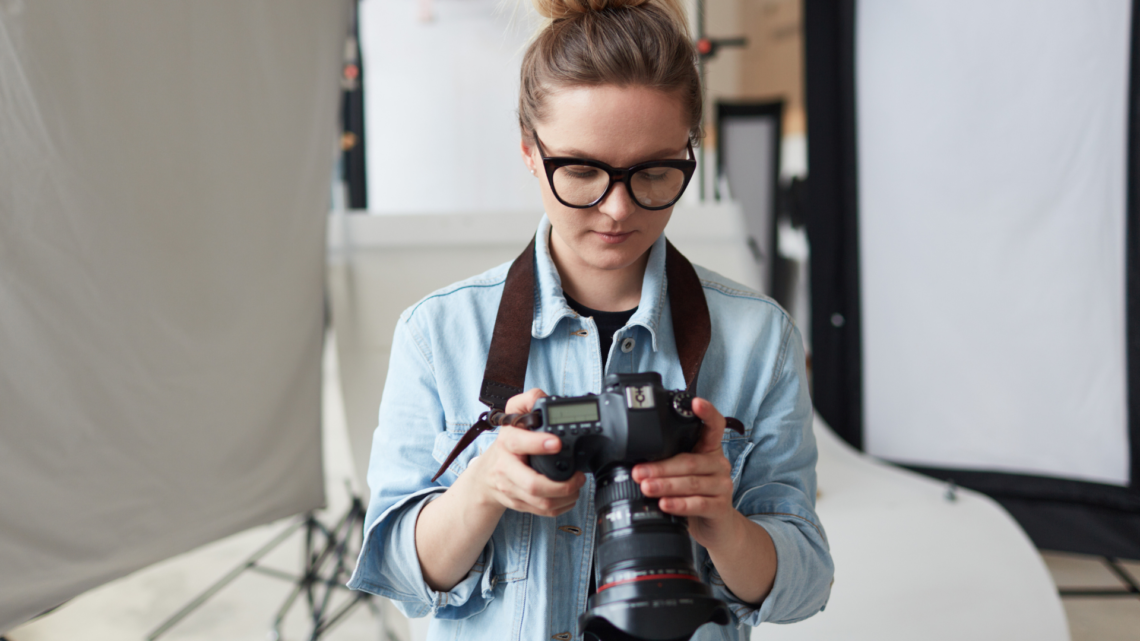
You hold a camera and want steady improvement; this article shows how to build practical habits that make better photos consistent. Practice deliberately with simple exercises—focus on composition, light, and using manual settings for short, repeatable sessions.
They will learn clear, actionable tips that fit into everyday routines and assignments that reinforce skills without overwhelming. This piece points toward hands-on drills and essential habits that turn occasional snapshots into confident photographic work.
Essential Photography Practice Tips for Beginners
These practical tips focus on core camera control, exposure, composition, lighting, gear choices, and post-processing to build reliable habits and faster progress.
Mastering Camera Basics and Controls
Beginners should learn their camera’s physical layout: mode dial, shutter button, command dials, AF point selector, and menu shortcuts. Practice changing ISO, shutter speed, and aperture without looking, so adjustments become automatic during shoots.
Use the camera manual and a short checklist for lens changes, battery swaps, and sensor cleaning. Experiment with both a DSLR and a mirrorless body if possible to compare viewfinders and autofocus behavior.
Practice focusing: single-point AF for static subjects, continuous AF for moving subjects, and manual focus for macro or low-contrast scenes. Read histograms after shots and review focus on the LCD at 100% to confirm sharpness.
Understanding the Exposure Triangle and Camera Modes
Teach the exposure triangle—aperture, shutter speed, ISO—by setting one variable and adjusting the others to achieve correct exposure. Use aperture priority to learn depth of field effects: wide aperture (low f-number) for shallow DOF and background blur (bokeh), small aperture for landscape sharpness.
Practice shutter speed control: use 1/500s+ for fast action, 1/60s+ for handheld, and slower speeds with a tripod for motion blur. Raise ISO only as needed; balance noise versus exposure in low light.
Switch to manual mode after mastering priorities to control all three. Learn exposure compensation in program and aperture modes to correct camera metering in tricky lighting.
Fundamental Composition Techniques
Start with the rule of thirds and place key subjects along grid intersections. Use leading lines, negative space, and visual weight to guide the viewer’s eye. Break symmetry deliberately and frame subjects with foreground elements to add depth.
Vary focal lengths: wide-angle lenses exaggerate perspective and work for landscapes, while telephoto compresses distance and isolate subjects in portraits. Watch backgrounds—simplify or blur them with a wide aperture to avoid distractions.
Practice multiple compositions for one scene: change height, distance, and angle. Review images critically to identify stronger framing, then apply those choices to future shoots.
Effective Use of Light for Impactful Photos
Observe light direction, quality, and color temperature; shoot during golden hours for warm, soft light. Use diffused light from overcast skies to minimize harsh shadows for portraits. Employ a fill flash or a reflector to lift shadows when backlighting subjects.
Understand white balance and color temperature to keep tones accurate; set custom WB or correct in RAW during editing. Practice metering: spot meter for faces, evaluative for even scenes, and read the histogram to avoid clipping highlights.
Control light with a tripod and ND filter for long exposures, or use a flash and modifiers for studio-like results outdoors. Note how light changes the mood and adjust the composition accordingly.
Choosing the Right Equipment and Accessories
A basic kit includes one versatile lens (e.g., 24–70mm or 18–55mm), a sturdy tripod for stability, and a camera bag to protect gear. Add a wide-angle for landscapes, a telephoto for wildlife, and a macro lens for close-up work based on interests.
Carry spare batteries, multiple memory cards, a lens cleaning kit, and a remote shutter release. Consider filters: polarizers for reflections, ND for long exposures. Invest in a quality strap and weather protection if shooting outdoors often.
Join camera clubs or online photography communities to test gear before buying. Borrow lenses to learn how focal lengths affect composition and depth of field.
Photo Editing and Post-Processing Essentials
Shoot RAW to retain maximum data for adjustments in Adobe Lightroom, Luminar Neo, or free tools like GIMP. Start by cropping, straightening, and adjusting exposure, highlights, shadows, and white balance.
Use local adjustments (gradients, brushes) to refine skies or subjects, and apply noise reduction only when needed. Learn color theory: adjust saturation selectively and use complementary colors to enhance visual impact.
Export with appropriate sharpening and file settings for web or print. Practice non-destructive workflows and create presets to accelerate consistent edits across a photography project.